

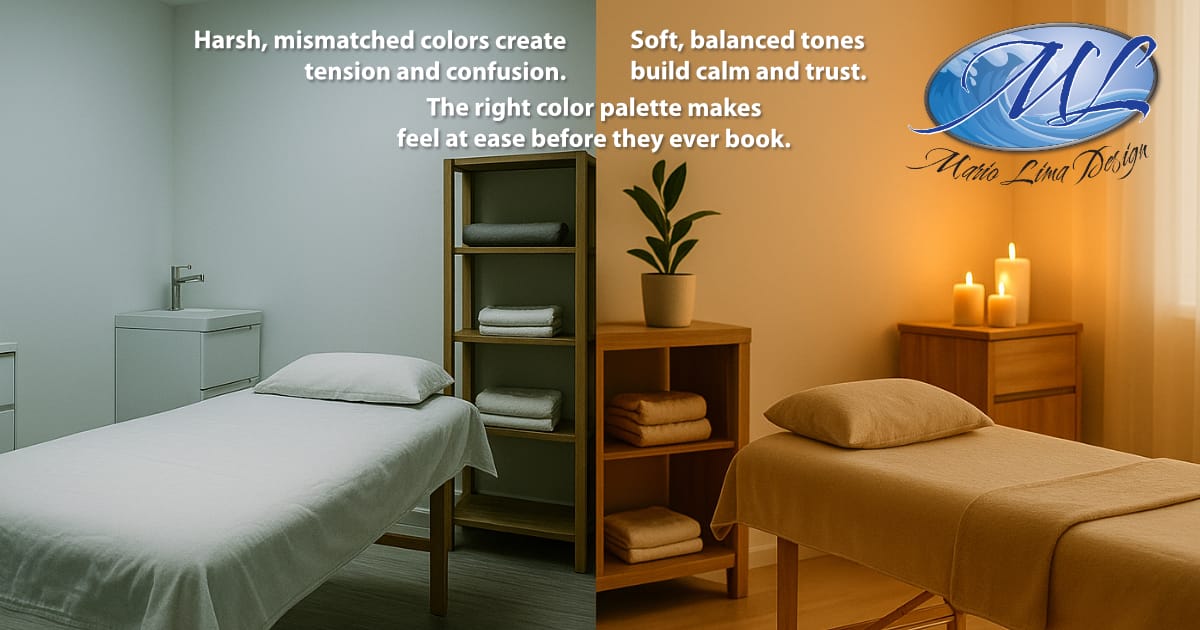
Color determines the first feeling your brand creates
Before a visitor reads a single word on your website, they feel something. In wellness, that feeling often determines whether they book an appointment or move on.
Color is one of the strongest emotional signals in design. It tells clients who you are before you introduce yourself. A warm neutral palette says calm and approachable. A clean white and aqua combination says clinical and precise. Your palette becomes the emotional handshake that starts every client relationship.
How color shapes emotion
People react to color instinctively. The mind connects hues and tones with feelings long before logic steps in. In the wellness industry, where clients are looking for calm, comfort, and trust, the right palette is essential.
Warm colors like peach, beige, or sand create approachability and warmth but can feel overwhelming if overused.
Cool colors such as teal, sage, or pale blue evoke calm and balance but may seem distant if the contrast is too strong.
Natural neutrals like stone, cream, and taupe connect to earth and stability, which is why spas and massage studios rely on them.
The key is harmony. Color balance is what makes a brand feel intentional rather than accidental.
For more on how trust begins the moment someone visits your site, read How Wellness Websites Build Trust Before Clients Ever Book.
What do your colors say about you?
Your color palette is more than decoration. It is communication. It tells potential clients whether your space feels relaxing, refreshing, or revitalizing.
Massage studios often do best with soft, natural tones that feel organic and personal.
Yoga studios lean toward grounded earth tones or balanced greens that suggest renewal and growth.
Med spas often choose cooler whites with subtle metallic or aqua accents that signal cleanliness and expertise.
A well-designed palette aligns your visual identity with the experience you deliver in person.
The hidden power of consistency
Consistency builds credibility. When your logo, website, signage, and social posts all share the same colors, clients feel a sense of comfort. Their brains recognize your brand instantly, which builds trust.
When colors shift between screens, print materials, or even uniforms, it creates subtle friction. Clients may not notice consciously, but they feel the inconsistency.
Color is part of the same emotional thread that connects your visuals, website, and environment. When those threads are aligned, they create harmony.
To see how visual consistency strengthens your online presence, explore the Brand Identity Design packages at Mario Lima Design.
A simple story: from cluttered to cohesive
A massage therapist came to me with a brand that felt scattered. Her site had coral buttons, mint headlines, and lavender accents. Each color was pleasant on its own, but together they competed for attention.
We reworked her palette into a calm mix of soft stone, muted green, and pale gold. The result felt like exhaling. Within weeks, she noticed more online bookings and longer client sessions. Nothing else changed except how the brand felt.
Color alone can shift how people perceive value, care, and professionalism.
The most common color mistakes
Copying big brands. What works for a global skincare company might not fit a local wellness practice. Start with your values, not someone else’s aesthetic.
Chasing trends. Seasonal colors look dated quickly. A timeless palette stays relevant longer and feels more authentic.
Ignoring contrast. Clients of all ages and devices need readability. Low contrast between background and text can make content harder to read, especially on mobile.
Overlooking alignment. When your website, logo, and social content use slightly different tones or hues, clients sense something is off. Aligning everything visually builds familiarity and comfort.
Building a color system that feels like you
A color system is more than a collection of swatches. It is a plan for how each color supports your brand’s message.
Primary color: the one that defines your brand personality.
Secondary color: adds balance and variety without distraction.
Accent color: draws attention to calls to action or special details.
A thoughtful system helps your content stay unified across digital and print. It becomes the framework that keeps your brand recognizable wherever it appears.
Quick color audit checklist
Use this five-point check to see if your current colors align with your message:
- Do my website and logo share the same palette?
- Are my social media graphics using consistent tones?
- Do my colors reflect the feeling I want clients to have?
- Is my text easy to read on every device?
- Do my photos complement my brand colors or compete with them?
If you answered “no” to two or more, it might be time to refresh your palette.
- Bringing it all together
- Color is not just what clients see. It is what they feel. In wellness, where experience and comfort are everything, your palette can be your most persuasive marketing tool.
- The right combination creates calm, builds confidence, and helps people trust your expertise. When your colors, typography, and visuals align, your brand becomes something clients recognize and return to.
- If your current branding feels inconsistent or outdated, it may not need a full redesign. Sometimes a refined color system is enough to elevate everything else.
- Explore our Brand Identity Design services to discover how color can help your brand feel as balanced as the experience you deliver.
Frequently Asked Questions
How do I pick the right colors for my wellness brand?
Start with how you want clients to feel. Choose colors that express those emotions. Natural, muted tones often work best in wellness because they communicate calm and clarity.
Should my logo and website use the same colors?
Yes. Consistency across touchpoints creates recognition and trust. Use your logo colors as the base for your entire palette.
Can I refresh my colors without changing my whole logo?
Absolutely. Adjusting saturation, brightness, or supporting tones can modernize your brand while keeping it familiar.
What colors work best for wellness businesses?
It depends on your specialty. Massage and yoga brands tend to succeed with warm, natural tones. Med spas and clinics often favor clean whites, blues, and greens for a sense of professionalism and purity.


0 Comments