

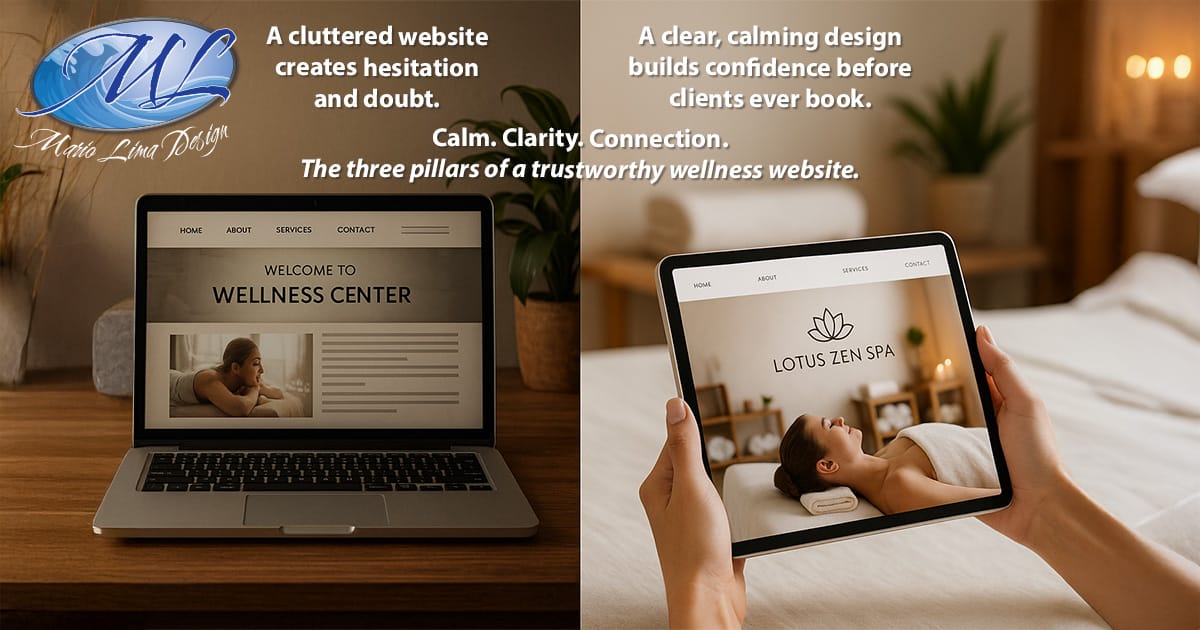
Trust begins online, long before the first appointment
A new client has your name from a friend or a quick search. They tap your website on their phone. In the first few seconds they decide whether you feel safe, professional, and aligned with what they need. That quiet decision, often made in a moment, is the difference between a booked appointment and a closed tab.
In the wellness world, trust is the product before the product. Your website either reflects the care you bring to every session or it introduces friction and doubt. This guide shows you how to turn your site into a place where clients feel calm and confident enough to book.
At Mario Lima Design, we build websites for wellness brands that feel as grounded as your practice. The ideas below are the blueprint we use to help massage therapists, yoga studios, and med spas turn visitors into clients.
The first impression happens in seconds
People judge credibility quickly. Your homepage must signal safety and professionalism at a glance. The right image, typography, and layout can reduce anxiety and help a client feel “this is for me.”
What helps in the first two scrolls:
Authentic imagery. Use real spaces and real practitioners whenever possible. If you must use stock, select modern, natural photography without clichés.
Clear visual hierarchy. Strong headline, short subhead, and a simple primary action such as “Book a session” or “See services.”
Consistent color and type. Your palette and fonts should match your brand voice and be applied consistently across headings, buttons, and highlights.
Clean navigation. A simple top navigation with Services, About, Pricing, and Contact lowers cognitive load and keeps visitors moving.
For a deeper foundation on what makes a strong business site, read my What Makes a Great Small Business Website blog.
What “trust” looks like in wellness design
Trust is a feeling, but it is created by practical choices.
Imagery that tells the truth
Real photos of your team, your space, and your tools are high-trust assets. Avoid over-posed images. Look for eye contact, natural posture, and real light. Aim for a consistent look across the site and social feeds so the brand experience feels unified.
Accessibility is credibility
Accessible sites are easier for everyone to use. Proper contrast, clear focus styles, descriptive alt text, and keyboard-friendly forms communicate care and competence. Accessibility is not a checklist, it is a signal that you pay attention to people.
Copy that sounds like you
Use a friendly, confident tone. Focus on outcomes clients care about. Replace insider jargon with plain language. A short “What to expect” section reduces uncertainty and increases comfort.
Color and tone
Wellness brands often succeed with natural tones, soft neutrals, gentle whites, and balanced accents. A med spa might lean into clean whites with a cool accent. A massage practice might choose warm wood textures with soft greens. The goal is balance and clarity, not trend chasing.
Typography and spacing
Readable body copy and well-spaced sections feel organized and calm. Choose a clean sans-serif for User Interface elements and pair it with a humanist serif or soft sans for headlines. Keep paragraph widths comfortable and add breathing room between sections.
If you’re not sure whether your site is checking all the right boxes, take a look at my Wellness Website Trust Checklist.
It walks you through the exact elements that make clients feel confident booking their first session, before they ever meet you.
The hidden traps that break client confidence
Many wellness sites lose trust in ways owners cannot see from the inside. These are the most common issues we fix first.
Outdated design
A ten-year-old theme, tiny images, and inconsistent colors suggest neglect. Visitors may wonder whether other parts of the business are also out of date. A modern layout and consistent brand system signal active care.
Broken booking funnels
If the booking button is buried, the calendar fails to load on mobile, or confirmation emails do not arrive, trust collapses. Test your booking flow on different devices every month. Ask a friend to try it with fresh eyes.
Slow load times
Speed is a trust issue. Long waits feel like friction and risk. Optimize images, defer non-critical scripts, and use a caching layer. For practical, quick wins, read more in the 5 Ways to Speed Up Your Website (That Actually Work) blog.
Cheap or Unmanaged Hosting
Unreliable hosting and lack of maintenance lead to downtime, errors, and security warnings. Clients do not know what is wrong, they only feel unsafe. My Why “Set It and Forget It” Website Hosting Is Hurting Your SEO (And How to Fix It) blog explains the impact and fixes.
Weak mobile experiences
Most first visits happen on phones. Make sure text is readable without zooming, images scale cleanly, and the booking button is visible in the first screenful.
Inconsistent brand touchpoints
If your website voice, Instagram tone, and Google Business Profile do not match, clients hesitate. Align your photography style, colors, and messaging across channels so the brand feels unified.
Turning design into connection
Trust is the start. Connection is the outcome that fills your calendar. Here is how to guide a visitor from comfort to commitment.
Tell a clear, human story
Use a short hero statement that says who you help and how you help them. Follow with a simple benefits list and a single action. On the About page, write a brief, honest story about your practice and values. Include warm, professional photos of you and your space.
Show proof
Display reviews with faces and first names when possible. Link to Google reviews for verification. Add a small “What clients say” carousel near the booking section.
Make next steps effortless
Use a primary action and keep it consistent: “Book a session,” “Start consultation,” or “Check availability.” Keep forms short. If you collect sensitive data, communicate how you keep it private.
Educate lightly
Short, friendly guides build authority without overwhelming your audience. A “What to expect in your first visit” or “How to choose the right treatment” article helps the hesitant client move forward. For broader visibility and on-site improvements, check out Why Your Website Isn’t Showing Up on Google (And How to Fix It).
Keep everything current
Update pricing, team details, hours, and services. Fresh information builds confidence. Out-of-date content creates doubt.
When we design wellness websites at Mario Lima Design, every layout, color, and call to action is chosen to create comfort and confidence. Design is not decoration. It is how you deliver the feeling of care before a client ever meets you.
A simple wellness website checklist
Use this quick pass to spot gaps that affect trust.
Real imagery of your team and space
Clear headline plus one primary action
Services summarized in plain language
Mobile booking flow tested on multiple devices
Consistent colors and type across the site
Fast load times with optimized images
Reviews visible near booking sections
Updated hours, pricing, and contact details
Accessible color contrast and alt text for key images
Calm, clarity, connection
Your space is designed to help people feel safe and supported. Your website should do the same. If a visitor feels calm, understands what to do next, and sees proof that you are reliable, trust follows. Bookings follow trust.
Ready to make that first impression count? If your current site feels dated, slow, or confusing, let us help you shape a calmer, clearer experience that converts visitors into clients. Start with a quick discovery call on the contact page. We will talk through your goals, your current site, and a simple plan to elevate both trust and results.
Frequently Asked Questions
How do I make my wellness website feel more trustworthy?
Use real photos, clear headings, and a single primary action on each page. Keep the design clean and consistent. Add recent reviews and a short “What to expect” section. Test the booking flow on mobile.
What is the biggest mistake wellness professionals make with their sites?
They let a site sit unattended. Design ages, plugins break, and content drifts out of date. A small maintenance routine keeps your site fast, secure, and credible.
Do I need a blog to build trust, or is a booking system enough?
Booking is essential, but helpful content builds authority and comfort. Short guides on common client questions can lift conversions and search visibility.
How often should I update my wellness website?
Review key pages monthly. Refresh imagery and testimonials each quarter. Revisit services, pricing, and FAQs at least twice a year. Schedule a quick speed and User Experience (UX) audit every six months.
Before you start redesigning, make sure you’re hitting all the right trust signals.
Download my Wellness Website Trust Checklist to see exactly what your site needs to make clients feel confident before they book.




0 Comments